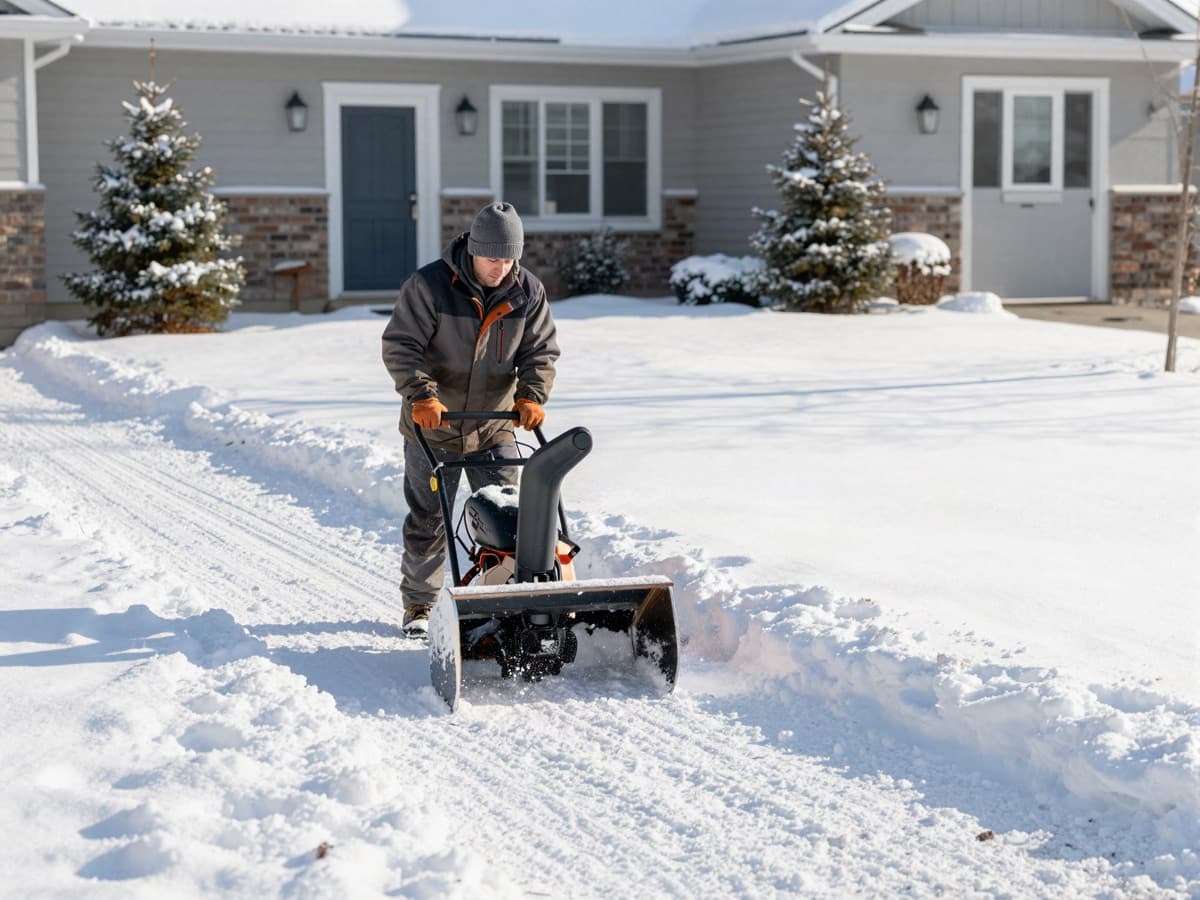
When to line up driveway plowing for the winter
The right time to lock a plow is before the first freeze, not after the first storm. Operators fill a winter book in October and November. Once a lake-effect band or a Tuesday overnight dump hits, the leftover capacity is the expensive kind: last-minute, per-storm, and one house at a time.
This is an awareness post for frost-belt homeowners. It is not a quote. If you want the cost math, read what driveway snow removal costs. If you already know you want the street on one route, skip to how to get your block on one plow.
Why August and September are the real snow season
Snow work is sold in the fall. A crew that already has Thursday on your street is not hunting five separate jobs at 5 a.m. in January. A crew that is still empty in December will take whoever calls, at whatever trip fee the storm will bear.
Two clocks matter, and they are not the same clock:
- The weather clock. NOAA's winter safety guidance is about storms, wind chill, and ice. In Cleveland, the official climate normal is 63.8 inches of snow a year (NOAA 1991-2020 at Hopkins). Columbus is a lighter market, but it is still a residential plow product, not a once-a-decade novelty. Watch your local NWS office - Cleveland or Wilmington / Columbus - for the first hard freeze and the first advisory, not for a booking plan.
- The booking clock. That runs 6 to 10 weeks earlier. If you wait for the first watch to post on Nextdoor, you are competing with every other driveway on the same alert.
Cleveland also publishes a real winter and snow-emergency page. When the city declares a parking ban, cars have to come off posted streets so municipal plows can pass. That is a city job. Your driveway, apron, and sidewalk are still yours. Do not mix those two.
Seasonal contract vs paying per storm
There are two honest ways the open market sells a cleared driveway. Neither is a trick.
Per storm / per visit. You call after it snows, or you have a trigger ("come if it is 2 inches"). Angi (2026) puts a typical visit at $51 to $203, averaging about $126. HomeGuide's driveway plow band is $30 to $70 for a standard drive. Per-storm wins in a light winter. It loses when you pay a full trip fee five times, and it loses harder when every neighbor on the street is also calling a different truck.
Seasonal contract. One price for the winter, a defined trigger, and (usually) priority on the route. Angi puts most homes at $300 to $700 for the season. HomeGuide's seasonal band is $200 to $600. You can overpay in a brown winter. You underpay the trip-fee spiral in a normal Cleveland year, where an inch or more falls on about 20 days.
The contract is not magic. It is a retainer on a route. The operator is selling you a slot on a loop they can run before dawn. That slot is cheaper to serve when the next stop is the next driveway, not a hop across the county.
BlockBundle's live snow product is a third shape: a standing per-event quote. You confirm the driveway and any walkways, and you pay when the provider records a qualifying plow. It is not a prepaid winter, and it is not a reserved slot on your block until a covering provider exists.
What neighbors should decide together before the first freeze
You do not have to organize a group to get a quote. That is the bundling rule: quote your own home, and let density improve the route. Still, a street that talks for ten minutes in October saves an hour of chaos in January. Decide these four things, then stop:
- Trigger depth. 2 inches is the common residential trigger. Shallower than that and you are paying for a dusting. Deeper, and you are asking people to wait through a commute they cannot make.
- What counts as the job. Driveway only, or driveway plus apron, walk, and sidewalk. Cities and HOAs often require the sidewalk. Columbus puts sidewalk clearing on the property owner (Public Service FAQ). A plow-only bid that leaves the walk is a different product than a full clear.
- Where the snow goes. Banks on the apron become ice. Banks on the neighbor's yard become a fight. Pile on the owner's lot, off the walk, off the storm drain.
- Who holds the street. One operator on one street beats five operators weaving around each other. That is the density flywheel: several homes on the same block are worth more than the same count scattered.
You can float those four points in a Nextdoor street post or a Facebook Neighborhoods group without turning yourself into the block captain. "We are lining up a plow before Thanksgiving. Same trigger, same operator if it pencils. Get a quote for your own house." That is enough. Do not collect anyone's money.
If you are in Cleveland, people already compare parking bans and plow timing on r/Cleveland. That thread is useful for the municipal side. It is a weak place to hire five different guys for five driveways.
What a plow operator wants from a street
This is the two-sided check. A winter loop only works if the operator can run it as a route. They want:
- A loop they can keep. Same streets, same trigger, all winter. Re-selling every storm is windshield time.
- Neighboring stops. Our provider-economics model treats a snow stop as about 30 minutes of hands-on work, plus a 30-minute drive-and-setup overhead for the trip. Five scattered jobs pay that overhead five times. Five homes on one street pay it once.
- Cars off the drive. A plow that has to wait for someone to move a sedan is not a 30-minute stop.
If you know a plow operator, point them at how clustered routes cut windshield time. The winter version of that pitch is a standing loop on a dense block, not a stack of one-off Nextdoor leads.
Getting your street ready
Do the fall work first. Put in driveway markers. Move the trash cans. Know where the city will pile the street plow so you are not paying a second time to reopen your apron. Then get a property-specific quote.
No. That is when winter books fill. Waiting for the first freeze puts you in the last-minute line with everyone else on the alert.
No. You get a quote for your own house. Neighbors joining the same operator is what makes the route cheaper to run. It is not a condition for a quote. See how BlockBundle works.
In the open market, seasonal if your winters are frequent (Cleveland-class snowfall), per storm if you get a handful of events and can live with a slower response. BlockBundle's live snow product is per-event: standing quote, charge when the plow is recorded. The cost post walks through the market numbers.
Sources:
- NOAA / NWS - Winter safety: https://www.weather.gov/safety/winter
- NOAA 1991-2020 climate normals via Current Results - Cleveland 63.8 inches/year: https://www.currentresults.com/Weather/Ohio/Places/cleveland-snowfall-totals-snow-accumulation-averages.php
- City of Cleveland - Winter and snow / parking bans: https://www.clevelandohio.gov/city-hall/office-mayor/mayors-initiatives/winter-and-snow
- Angi - How Much Does Snow Removal Cost? [2026 Data]: https://www.angi.com/articles/how-much-does-annual-snow-removal-contract-cost.htm
- HomeGuide - Snow Removal Cost: https://homeguide.com/costs/snow-removal-cost